Pages

Monday, May 2, 2016

Early Stars: Our Girl vs. The Shiek - Core Post #1 By: Arielle Sitrick


Staiger and deCordova write about the first emergence of stars: prior to the popularization of film, performers weren't notorious as they are today and have been for the last seventy five years give or take. DeCordova writes that stars emerging as a phenomena depended on strict regulation of what conversation they provoked. Fitting in with Hays administration restrictions on what movies could and could not depict, star-players were as produced as the films they played in. Controlling content, including movie players, in a manner supporting a particular film's distribution mattered to the Hollywood's decision makers.

DeCordova breaks down the "distinction between the filmic, profilmic and the real" as he believes it play into creation of the "picture performer". A separation between the actor’s role in the movie, the production and “reality” play into the star phenomenon. A star exists within the world, but without. In the eyes of the public, a star is enigmatic and extraordinary, but must remain ordinary in small ways so the fantasy is grounded in culture. Many tabloid magazines have features titled something like “Stars: They’re Just Like Us” that familiarize the public with stars by showing them performing ordinary activities and tasks. As stars exist primarily in images, and moving images (or whenever cameras are around), it behooves the studios to circulate images of their film's actors that coincide with the particular archetype this person serves the studio.

Until the post-modern era, stars overtly reinforced gender stereotypes and social structure, while covertly opening up critique. Of course, not all films opened critique, but those that did generally did it quietly, or through comedic manners (i.e. screwball comedy). Screwball comedy films were naughty, barely sliding by the MPAA’s production code with “an infectious sense of fun to them, and a saucy sexiness that often seemed to barely skirt the rigid proscriptions the MPAA’s Production Code” (Bryge, Miller 1991 xiii). Screwball comedy was a way for filmmakers to be daring while existing within the framewokr of censored Hollywood. Whereas censorship in cinema symbolized constraints of society and adherence to social norms, comedy was Hollywood’s arena for social commentary and rebellion­–through laughter and ambiguity.

Until cameras became more readily available and the internet was a public tool, star images were archetypical, fastening a star to their ascribed archetype. This both inhibited and gave star-persons freedom to exist behind closed doors more than they can today. Today, stars are expected to have social media presences and self-promoted brands, a far different cultural atmosphere than existed when stars emerged and studios were responsible for branding. In the 21st century, more than ever, individuals are expected the create and promote their own brands. The studios no longer control what is circulated, and the baton has been tossed to the public.
            

Saturday, April 30, 2016

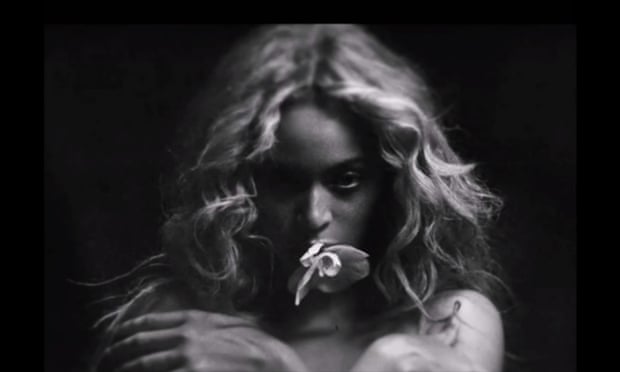
Supplemental Post #8: Beyoncé's Lemonade means way more than infidelity...


After I experienced all of the hoopla that surrounded Beyoncé’s release of Lemonade, I decided to do some self-educating and researched a little bit more about what critics, feminists and women alike were saying about this monumental breakthrough for women in the entertainment industry. What I found was something much deeper than I had imagined — sure, much of Beyoncé’s album surrounds allegations about Jay-Z’s infidelity, but her music and her lyrics have touched upon what it means to be a black woman in Hollywood and what it means to be a black woman in the United States.

I found an article in The Guardian that talked specifically about these contemporary issues and much like Beyoncé’s Formation music video, the article also touches upon all of the social, political and historical issues that African-American women have experienced since times of slavery and segregation.


Here’s the article. I definitely recommend giving it a read.

Core Post #3: The Effects of JLo’s Butt

 The Effects of JLo’s Butt


 1998 Entertainment Weekly cover
There is no question that Jennifer Lopez is one of the sexiest women in Hollywood. But what is it that makes her so beautiful? Is it her personality? Her talent? Her charm? Hardly. In fact, as we have learned throughout countless class discussions and readings, it is her body — more specifically her butt — that has garnered her fame. In many ways, JLo’s gluteus Maximus is more famous than she is — she even devoted a whole song to the body part that defines her as the bodacious and sexualized Latina that she is today (https://www.youtube.com/watch?v=nxtIRArhVD4). Sure, Jenny from the Block wasn’t always known for her derrière, but that is what makes this fact so surprising. Celebrities are constantly being judged, manifested and recreated to fit an image, a profile and a stereotype — bring in the race and gender card and you have a concoction so toxic that people stop seeing the person and start viewing objects.

Latinas and African American throughout popular media are known for their seductive, sensual qualities and, like Sofía Vergara and Jennifer Lopez, are known for their bodies and not necessarily their talent. Because of her ethnic background, Vergara is constantly being appropriated to fulfill certain roles and stereotypes — her accent is exploited, clothing choices to accentuate the signature Latina figure that is revered by women everywhere. However, JLo is the exception to the rule. Her popularity has allowed her to crossover into “white” Hollywood and around the world.

JLo’s popularity represents so much more than the rags to riches story of Jenny from the Block (Bronx). Her beauty has reset a standard for what beauty is in Hollywood — curves are now more popular than the emaciated stick figure look that has taken so many teen girl lives; JLo has also set an ideal Latina look book for Latinas — to be attractive, one must maintain a small waist and a large posterior. Unfortunately, this sets an unattainable standard for women that may not have a similar genetic body structure. In the Beltrán reading, she says, “Latinas in the U.S. don’t necessarily buy into white American cultural standards that pose that women should strive to be model-thin. Although young, acculturated Latinas increasingly internalize conflicting ideals, traditional Latino cultures often tend to consider women most beautiful with some weight on their bones, which connotes health, inner peace, and success.” I think it is important to not that beauty comes in all different shapes and sizes and though JLo supports this, no one can beat her flawless glam.

Supplemental Post # 6: Response to Lemonade

Jimmy Kimmel said it best. "Beyonce took Jay-Z's lemons and squeezed really hard and made lemonade."

While Beyonce is probably the first artist to drop a surprise album, then one-up herself by dropping a visual album on an HBO Special, she's certainly not the first artist to devote an album (or a large portion of an album) to her significant other's infidelity and/or divorce. Though it seems she's not planning to divorce Jay-Z? Idk. She's the queen and can do whatever she wants.

But I have to admit, Beyonce's response to her husband's alleged infidelity is extreme. When Jessica Simpson and Nick Lachey got divorced, the world was treated to a party on roller skates and a mopey, sappy soul, respectively. Okay, so maybe they're not huge stars, but Chris Martin gave us "Ghost Stories," Jt gave us "Justified," and Adele, oh Adele, you've given us so much. Although Taylor Swift frequently sings about her breakups, at least we all have fun trying to guess who her break up song is about. 

My question is, why do these celebrities expect us to care about their angst, relationships, break-ups, and woe-is-me music? Well for some of them, like Adele and Beyonce, it's because it's so compelling and entertaining we just can't look away. Beyonce has even punctuated her music by making it visual. Entirely visual. Not only to we hear her pain and frustration, but we see it. And seeing is believing. 

Why do we care? I guess it depends on how attached you are to the image your star of choice has portrayed. I really couldn't care less about Jessica Simpson and Nick Lachey. I had a lot of fun watching Adele slay whatever idiot broke her heart. I was all for her. I will always support the infinitely more talented Justin Timberlake over Britney Spears. But really, Justin Timberlake doesn't need my support. And nor does Beyonce. 

I think she speaks for all women who have put up with this shit and establishes herself as a force to be reckoned with, in a way most women can't. Who the hell cheats on Beyonce? Jay-Z officially has 100 problems. He's an idiot, and the world has been given a great gift as a result.


Friday, April 29, 2016

Supplemental Post: Are Celebrities Timeless? John Wayne and the California State Assembly

An extra one just in case!

We tend to think of the celebrity image as timeless. What a celebrity meant at one point in time becomes stagnated, a fixation, a locus of ideology and extrapolation. As with my Mary Kate and Ashley post, this one also has to do with the loss of celebrity, the rupturing of celebrity image. While the former is more deliberate and initiated from the producers themselves, the California State Assembly refusing to honor John Wayne signals the dynamics of viewership.

"Gipson and Alejo both said they would not be able to return to their constituents and feel good about supporting a resolution that honored a man with a history of making racist, disparaging and hateful remarks about minority groups."


https://www.washingtonpost.com/news/morning-mix/wp/2016/04/29/proposal-for-john-wayne-day-in-california-rejected-after-some-lawmakers-quote-actors-past-statements-about-minority-groups/

Supplemental Post #7: Transcending Celebrity, What Do We Do When Celebrities Escape and Disappear?


" “Skinny girls with blank expressions and seemingly little inclination to speak have fascinated American culture for so long….The mid-19th century witnessed the emergence of the aptly named fasting girls, women in their teens and early 20s whose silence and diminutive size stirred the interest of a public that believed they were spiritually extraordinary.,” wrote The New York Times in 2008. This is an apt description of the Olsens’ replacement persona, “Mary-Kate and Ashley Olsen, fashion designers.” Having stripped themselves of what the world had known them as previously – it was around this time, too, that they asked to not be referred to as ‘the Olsen twins’ – Mary-Kate and Ashley slowly transcended their celebrity image and became anew." 

Mary Kate and Ashley were such a prominent part of my childhood. Their brand was family-friendly enough for Indian censors to allow them to become a fixture in our lives, partly because the brand was so sprawling and encompassed TV shows, films, bags, pencil boxes, clothes, etc but also because they encapsulated an "Americanness" that felt legible to viewers otherwise unacquainted with the United States. I forgot just how big they were till I read this essay in Mask Magazine on how the demands of celebrity can shape interactions with pubic spaces, with the idea of being known, with the appeal of anonymity. The Olsen twins represent a lot of what is fetishized about fame and their withdrawal (unaccompanied with the pathologisation that usually envelops female celebrities with fatigue -- Lindsay Lohan, Amanda Bynes, etc) signals the effect WE - as consumers, fans, adorers -- impact their lives. 

On the 1990s, HIV/AIDs and Madonna: This is long, but important.

This is late, but only because thinking about this was very emotionally taxing and I have a lot of feelings. Also this is long, but informative I swear. I know my opinion takes up a lot of space sometimes so I am not going to reiterate my feelings about Madonna, cultural appropriation, and fetishization here at length. I will however, summarize it as: Madonna is a voyeur. A voyeur of the sexualities of the marginalized, especially gay people of color. She reproduces this sexuality in her work as an edgy fuck you to her white Catholic upbringing and as an attempt to glean some of this raw sex for white women. She tries to empower the white women who have been denied sexual independence for decades by emphasizes queer radical deviance. The problem is really the context. I think a lot of people in class didn't understand why someone like me would be upset about this. 


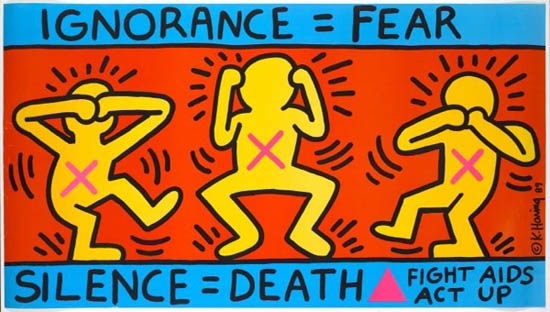
A lot of people in my generation lack an understanding of the 1990's from a LGBT perspective, mainly because of our countries refusal to teach sex health and history to young people. However, in the 1980's and 1990's, LGBT people were dropping like flies because of the HIV/AIDs crisis. While today we see HIV/AIDs as manageable, in the recent past members of the LGBT were dying mysteriously and no one cared. For years, few attempts were made to figure out was killing so many gay people. AIDS was originally referred to as the GRID or Gay Related Immune Disorder and many thought it was god punishing LGBT for their sins. The Reagan administration failed to acknowledge the issue and one member was taped laughing about the epidemic. Do you know what gay people did? They acted. They kicked up storms of dust. They deployed sex like a tool to get attention, the embodiment of any press is good press. By going to the streets via art, sex, and plain old visibility. So when two dancers kiss in Truth or Dare it is for liberation and revolution, not Madonna.


When hooks states that Madonna cannot understand Black joy fully because she does not understand the pain it contrasts and the oppression it defies (158), she is also talking about members of the LGBT community. Madonna appropriates voguing because she appreciates it as an art form. However, Black gay and trans people started voguing as a space in which they could be themselves and perform their genders and not be threatened, but instead praised. Praised for their creativity, praised for their femininity, and praised for their 'realness'. So when Madonna takes voguing from its community and greater social context, she is stealing something more complex and important than a dance style. By relegating Black performers to stand a foot behind her, and by listing white celebrities as those to emulate in the song she is re instituting a system of white hegemony. 


Yeah white women suffer from oppression at the hands of white man, but they have been huge contributors to perpetuating racism, especially in the name of overcoming sexism. So when Madonna responds to critique of her gay fetish with "What does exploitation mean?...In a revolution, some people have to get hurt. To get people to change, you have to turn the table over. Some dishes get broken" as bell hooks reproduces in her essay, she is echoing sentiments of white feminists before her. A few examples include, the white female abolitionists who reversed their opinions once they learned Black men may get the suffrage before them, the white women who got birth control legalized by citing it as a means to control populations of the poor, immigrant, and/or Black communities, or even the white middle class gay people who silenced voices like those of Sylvia Rivera and Marsha P Johnson after the Stonewall Revolution.


Madonna's attempts to liberate white female sexuality is admirable, but how many times do people of color have to lie down so white women can use the bridges of our backs to reach their own desired position. When is it our turn? Patricia Arquette's  recent comments during her speech for winning the Oscar for Best Actress suggests the time came and went unnoticed and the cycle has started all over again. Funny enough, an Asian woman still hasn't won an acting award at the Oscars.

The thing about Madonna: Truth or Dare, is Keshishian, the director's ability to illuminate Madonna's use of the gay body of color as prop. Keshishian inter-cuts Queer Nation marching in the NYC Pride Parade (a much more radical space prior to the mid-2000s) with Oliver's homophobia. By doing so, Keshishian notes how depoliticized Madonna's touring Bubble is. She cries over Keith Harring's death of AIDs related complications, but does not name him until a voice over. She demurs when on the phone with her father or talking to her boyfriend Warren Beatty, but demands a Black crew member show her his penis on camera, and questions why one of her dancers even bothers to where underwear in bed with her. By placing these moments in black and white while filming her stage performance on stage in color, Keshishian exposes that Madonna is always performing. Though the film stock changes, her performance of self doesn't. It is a film of juxtapositions and contradictions, yet gives us a portrait of Madge that has breadth and depth. Maybe its ability to expose the totality of her private parts (hehehe) is why she can't watch the documentary to this day.